David Montgomery, Tytus Howard, and everything after

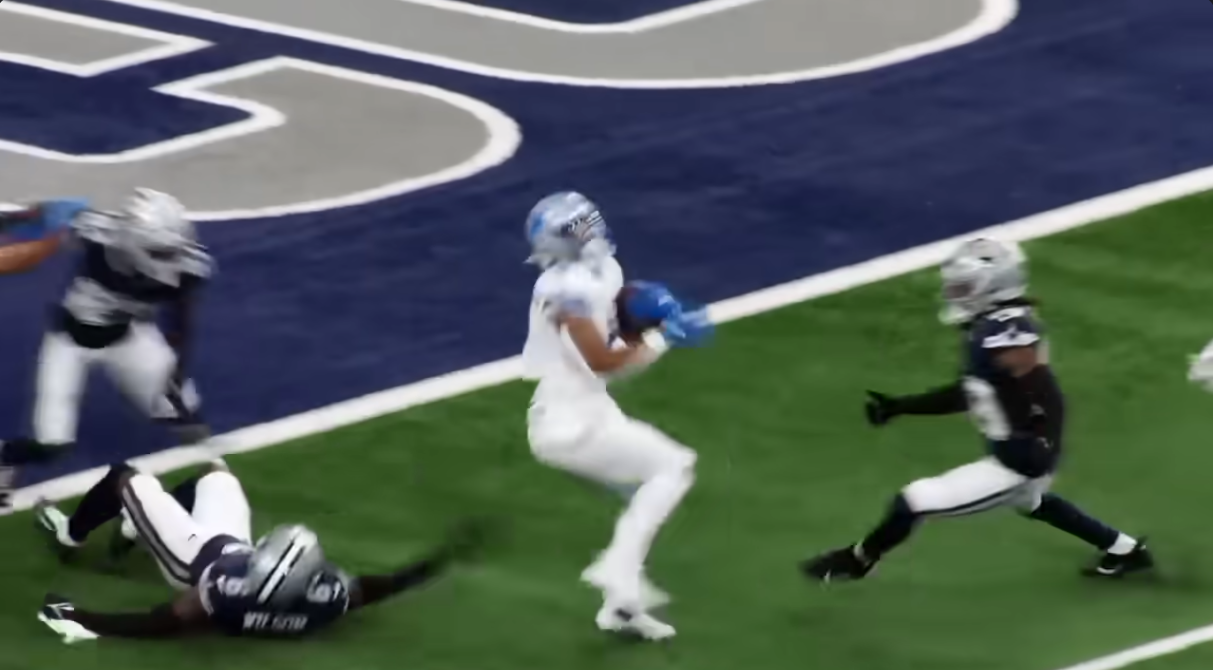
The Texans had a Joe Mixon-sized hole last season that they never fixed, and trading for David Montgomery fills it in.
As good as last year's team was, Woody Marks simply wasn't ready (or able) to be a full-time back. The rookie back checked out of several games with injuries and didn't show the overall decisiveness or tackle-breaking to be a difference-maker in the NFL. Had they instead had a season like Mixon's 2024 available – where he averaged +0.3 rushing yards per attempt despite having the ninth-worst expected yards per carry – it would have gone a long way towards giving them that consistent ground game they needed. Mixon's off-site, mostly-covered-up injury wasn't a deathblow to the Texans chances, but it was a mortal wound that slowly bled out, ending in Marks' fumble deep in Patriots territory that closed the door on their Divisional Round loss.
It's easy to play the "Montgomery is older, older backs can fall apart" game. But when you look at the rapidly escalating market for running backs in a world where two-high is now a dominant established meta, it's hard to think of an (available) back better suited to deal with it. Montgomery does not have megastar explosive juice, but he finished 12th in the NFL in rush yards over expected per attempt. The Lions prepared him for his Texans experience by giving him such horrific interior blocking in 2025 that he had the 12th-worst expected yards per carry. He's always been an underrated passing-down back.
For most of my career covering the NFL, the kind of back that Montgomery is was not worth trading a fourth-round pick for considering the age risk and the contract. Well, welcome to a league where running the ball is back to being a prerequisite to go anywhere. Defenses are designed to stop giving up over-the-middle chunks. Good offenses are going to need to take advantage of new rules, but the easiest way to unlock explosive plays is going to be through a sustaining ground game that forces defenses to play a different style of ball.
Montgomery can do that in the right situation. Now it's all about building that right situation. And the Texans have, once again, taken a sledgehammer to the offensive line room for the second straight offseason to make sure it's harder to create that right situation.
What I think Nick Caserio learned from Shaq Mason falling apart in real time in 2024, becoming so unplayable that he never even got a reported team visit last year, is to get out before the getting gets bad. He dealt Laremy Tunsil after his age-30 season. He now deals Tytus Howard after his age-29 season. Some of that is to pay a young core, yes – the majority of the savings here is not in cap space but in cash. But I have not seen any movement towards replacing Danielle Hunter. The age is not as important as the caliber of play. And while I think between pass-block win rate and PFF grades all of the metrics are rather elementary here, I think I'd settle on Howard as more "solid" than incredible.
Howard, for his part, got a three-year extension worth $63 million from the Browns, with over $40 million in guaranteed money. That tells you where the market is at for Howard and players like Howard. I think it's also telling us a lot about Caserio's risk tolerance on offensive linemen. Remember, when the Texans pivoted last year, they did not replace Tunsil with a star, but a one-year Cam Robinson contract they'd later trade. With Howard gone, they currently have not a single offensive lineman scheduled to make over $4 million in 2025. Caserio seems to have settled on one of two things: Either good offensive line play is so fungible that it's not worth chasing in comparison to paying the stars, or his own line was so terrible it wasn't worth paying period.
I struggle with the Howard trade. Not because I don't understand what's happening, but because it feels like the line now has zero stability. I didn't love Aireontae Ersery's rookie season, but he played decently enough towards the end of the year that at least between him and Howard I could keep focused on the interior as the improvement point. Now instead it's "could Ersery move to right tackle?" "What is Blake Fisher worth at this point?" "Is it a necessity that the Texans sign someone in a weak free-agent class?"
When Nick Caserio is fired and/or retires – it happens to every GM – one of the first things I'm going to remember about him is this idea of offensive line versatility. So many roster spots and training camps spent on players like Juice Scruggs and Howard asking where they play to create the best five. And all I really want is five guys who are good at their jobs. That's all. I don't want debates. I don't want to spend camp going through 80 permutations of what a line could look like. I don't want the vague and general idea of "competition." I just want answers and backup plans.
There are a few things I'd be doing if I were Caserio right now. One would be offering a second-round pick and more for Dolphins C Aaron Brewer since Miami seems intent to go full tank-mode Browns. Another would be figuring out what Ed Ingram's market actually is. (See: He does make a good move here or there!) The main gist of these moves is: the Texans don't just need versatility, they need asskickers. And if that means Trent Brown starts again at an advanced age and Stroud pays for that on some passing downs, well, that's what it means. The identity they wanted to have and the identity they actually had last season were not the same thing on offense. If you want to pound the ball, the line has to be good enough to clear the bar to do that.
Nobody's going to care how the sausage is made if it works, but the chef here has failed to bring the right ingredients time after time, and we keep bringing charred bacon to the table.